What Are NYC’s Makeup Air Rules for Range Hoods Over 400 CFM?
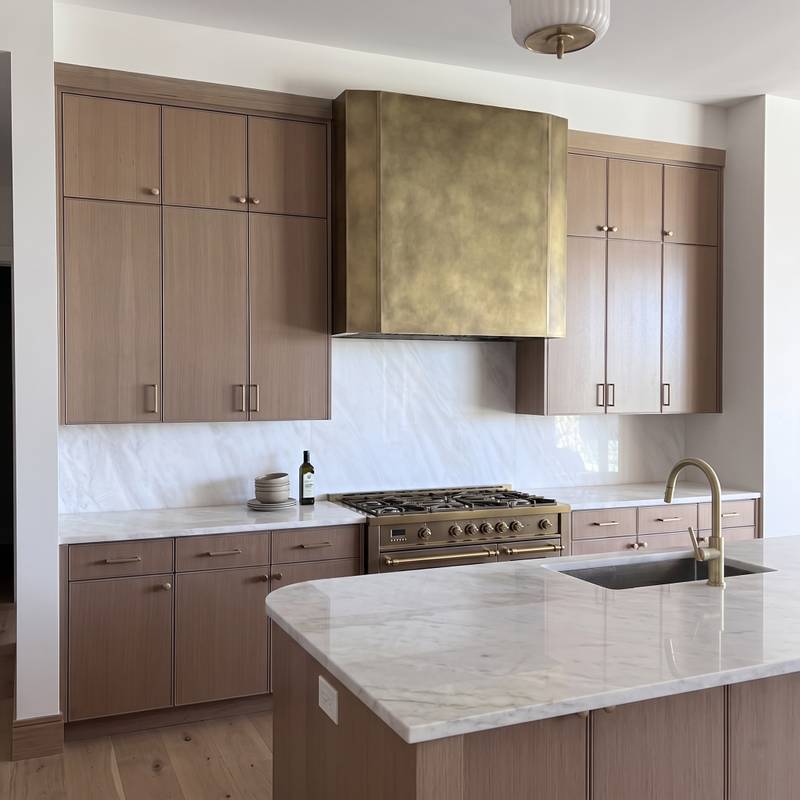
In an apartment the makeup air question usually decides whether the hood can be ducted at all.
In most of the country, a range hood conversation is between you, your contractor, and the code book. In New York City, there is a fourth party at the table: the building. And the building often decides the outcome before the code book is even opened.
Still, the code matters, because it sets the floor your plans must clear. New York City Mechanical Code section 505.2 requires makeup air for any exhaust hood system capable of exhausting more than 400 CFM, at approximately an equal rate to the exhaust. If you want a proper ducted hood over a pro-style range in the five boroughs, this rule is part of your project. Here is what it says, how it is satisfied in apartment buildings, and when the right answer is a recirculating setup instead.
What NYCMC 505.2 actually requires
The rule mirrors the national model codes: hoods capable of more than 400 CFM must be provided with makeup air at approximately the same rate as the exhaust. In New York City practice, that typically means a standalone makeup air unit or ducted makeup air components serving the kitchen, with the incoming air filtered and in many installations conditioned or tempered. The system must operate with the exhaust, not independently of it.
Two things to note. First, the trigger is capability, not intention. A 900 CFM blower you plan to run on low still counts as a 900 CFM system. Second, enforcement runs through the Department of Buildings permit process for ducted kitchen exhaust work, which in practice means your architect or expeditor deals with it as part of the alteration filing, not as a separate adventure.
The ductwork rules that surprise renovators
Makeup air is only half the code story. The city’s rules for domestic kitchen exhaust ducts are specific: ducts must be constructed of stainless steel, aluminum, or copper with smooth interior surfaces, built airtight, and fitted with a backdraft damper. Terminations must sit at least 3 feet from property lines and operable openings and at least 10 feet from mechanical air intakes.
In a single-family home in Staten Island or Queens, those are solvable routing problems. In a Manhattan high-rise, they explain why so many renovations end at the next section.
Why many apartments end up recirculating
A recirculating (ductless) hood filters kitchen air through grease and carbon filters and returns it to the room. It exhausts nothing outdoors, so the makeup air rule does not apply to it. For many NYC apartments, this is not a compromise chosen freely. It is the only option the building allows.
The reasons stack up: no existing duct path to the exterior, no practical way to create one through other units or common areas, co-op or condo alteration agreements that prohibit new penetrations, and facade rules that forbid new terminations. If your building falls in this camp, the design question changes from “how much CFM” to “which recirculating insert performs best inside a beautiful custom shell.” That is a solvable design problem, and custom shells accommodate recirculating inserts when the decision is made up front. For the full picture on venting possibilities in Manhattan apartments, see Can You Vent a Custom Range Hood in a Manhattan Apartment?
The alteration-agreement reality
Before you fall in love with a 1,200 CFM plan, read your building’s alteration agreement. Many co-ops and condos cap exhaust fan capacity, require board approval for any ductwork, demand licensed and insured contractors with specific coverage limits, and restrict work hours and elevator use. Some buildings prohibit ducted kitchen exhaust changes entirely in certain lines.
The sequence that works: confirm what the building allows, then design the hood to fit. Ordering a custom hood before the alteration application is approved is how expensive metalwork ends up redesigned. This is the single most New York-specific piece of advice in custom hood buying, and it applies whether your CFM triggers the makeup air rule or not.
What this means when you order a custom hood
The first design decision for a New York project is ducted versus recirculating, because it changes the shell’s internal requirements. The second is the CFM target, because anything over 400 CFM brings NYCMC 505.2 into the permit conversation. Both decisions belong before the drawings, not after.
That is how the NY/NJ team works with local projects. Monarch’s regional team serves New York City, Long Island, Westchester, the Hudson Valley, and New Jersey, and the design conversation starts with your building’s constraints, your range, and your ventilation plan. The hood is then drawn to your measurements and handcrafted in the Texas studio, with shape, size, straps, rivets, and finish settled on approved drawings before anything is cut. Learn more about the regional team on the New York / New Jersey page.
NYC makeup air questions
Does the 400 CFM rule apply inside a co-op or condo?
Yes. The Mechanical Code applies regardless of ownership structure. Your building’s alteration agreement can add restrictions on top of the code, but it cannot waive the code’s requirements.
Can my building prohibit a ducted hood entirely?
It can prohibit new duct penetrations and new exterior terminations, which amounts to the same thing for your project. Many Manhattan buildings do exactly this. Check the alteration agreement before planning a ducted system.
What if my building has no makeup air system?
Then a ducted hood over 400 CFM faces two hurdles: the code requirement and the practical question of where the makeup air comes from. In many apartment buildings, this combination is what pushes the project to a recirculating design.
Does a 600 CFM insert inside a custom shell trigger the rule?
Yes. The rule looks at the exhaust system’s capability, which is set by the insert’s blower. The decorative shell does not change the CFM, so a 600 CFM insert triggers the requirement whether the shell is custom metal, plaster, or cabinetry.
Who coordinates the makeup air with the building?
Your architect, expeditor, or mechanical engineer, as part of the alteration filing. The hood maker builds the shell to the approved plan. Keep the two scopes clear and make sure they talk to each other before fabrication starts.
If I go recirculating, am I giving up a real kitchen?
No. A well-chosen recirculating insert with quality grease and carbon filtration handles everyday cooking well. What you give up is the high-CFM capture of a ducted pro setup, which the building was never going to allow anyway. The custom shell looks identical either way.
Start with the building, then design the hood
New York rewards buyers who sequence correctly: building rules first, ventilation plan second, custom metalwork third. Get that order right and the code becomes paperwork instead of a problem.
Talk to the NY / NJ team about your building’s constraints, or request a quote with your range model and alteration status. For the New Jersey side of high-CFM planning, see Before You Order a High-Power Range Hood in New Jersey, and check lead times and process details.
- Can You Vent a Custom Range Hood in a Manhattan Apartment?Explore ducted and recirculating hood options for a Manhattan apartment, plus building approvals, cabinet fit and delivery access.
- Specifying a Custom Range Hood: A Guide for NY/NJ Design TeamsA guide for NY/NJ designers, builders and cabinetmakers covering hood drawings, equipment, finishes, approvals and delivery coordination.
- Do You Need Makeup Air for a Range Hood Over 400 CFM in Dallas?Dallas enforces the 400 CFM makeup air rule for range hoods. Learn when it applies, what compliance looks like, and how to plan your kitchen around it.
Talk to the NY / NJ team
Send your drawings, range model and the finishes you are considering.