
Dallas, Texas
Do You Need Makeup Air for a Range Hood Over 400 CFM in Dallas?
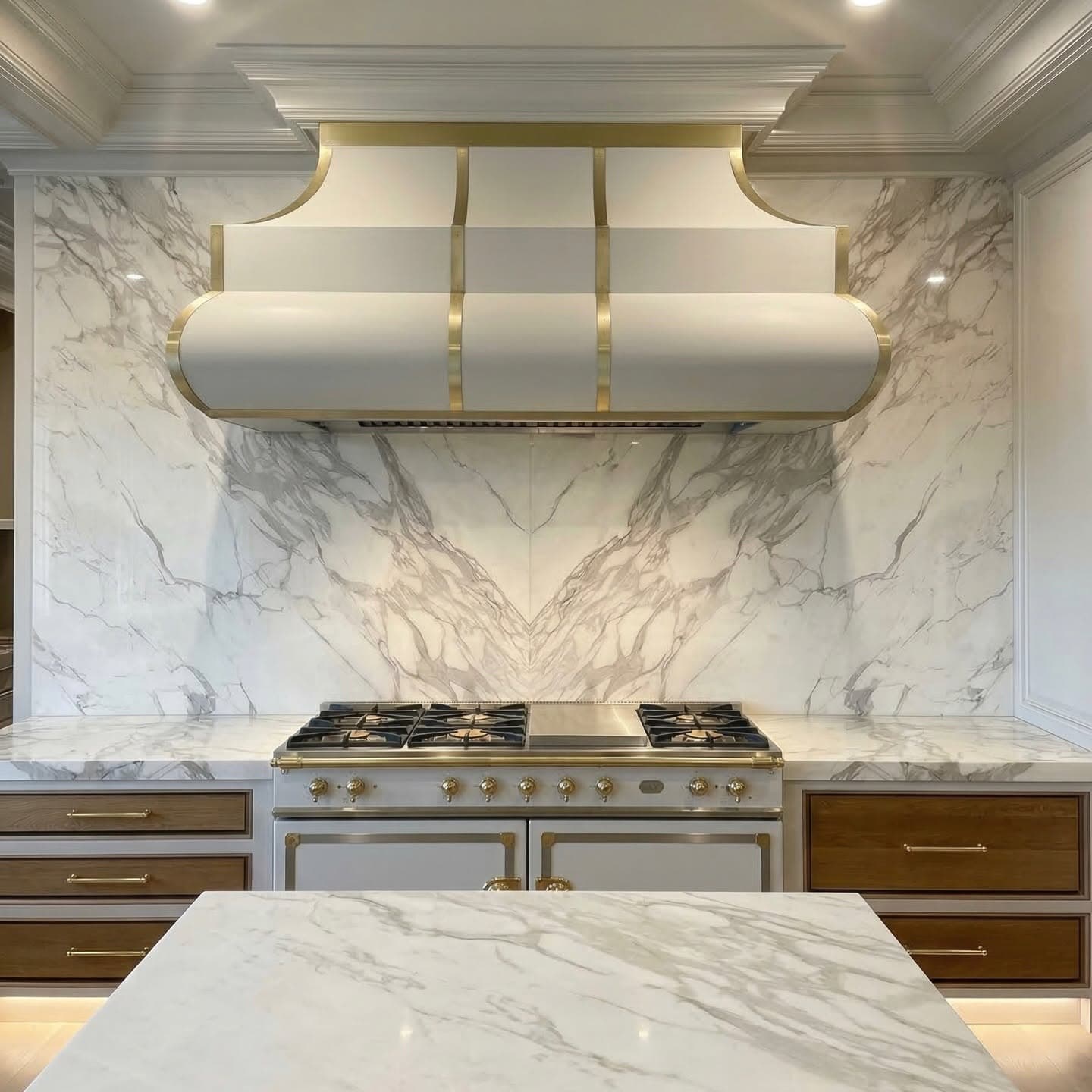
You are planning a serious gas range for your Dallas kitchen, and the hood you want moves 600, 900, maybe 1,200 CFM. Then your contractor or your permit reviewer says two words: makeup air. Most homeowners have never heard of it, and it sounds like a problem. It is not. It is a standard part of planning a high-performance kitchen.
Here is the short version. In Dallas, any exhaust hood capable of moving more than 400 cubic feet of air per minute must be supplied with makeup air at roughly the same rate. That rule comes from the mechanical code the city enforces. Once you know it exists, you plan for it early, your HVAC contractor handles it during rough-in, and your kitchen passes inspection without drama.
This guide explains the rule in plain English, what makeup air equipment actually looks like in a Texas home, and the order of operations that keeps your renovation on schedule.
The 400 CFM rule, in plain English
The International Residential Code (section M1503.4) and the International Mechanical Code (section 505.2) say the same thing: an exhaust hood system capable of exhausting more than 400 CFM must be provided with makeup air at a rate approximately equal to the exhaust rate. The makeup air system must have a means of closure and must start and operate automatically with the exhaust system.
Dallas has adopted the 2021 International Residential Code with local amendments. In the amendment documents reviewed, no change to the 400 CFM makeup air rule was found, so the rule applies as written inside Dallas city limits. Texas has no statewide residential code, so enforcement sits with each city’s building inspection department. If your project is in Plano, Frisco, Southlake, or another DFW suburb, confirm the requirement with that city’s permit office before you finalize your hood choice. Rules can vary by jurisdiction, and the local authority having jurisdiction always has the final word.
Why the code exists: backdrafting
A range hood does not create air. It removes it. A 900 CFM hood pulls 900 cubic feet of conditioned air out of your house every minute it runs, and that air has to come from somewhere.
In an older, leaky house, replacement air sneaks in through gaps around windows and doors. In a newer or well-sealed home, the hood can depressurize the house enough to pull air backward down the flue of a gas water heater, fireplace, or furnace. That backward flow is called backdrafting, and it can pull combustion gases, including carbon monoxide, into the living space. Makeup air exists to keep the house pressure balanced so every vented appliance drafts the way it was designed to.
This is a safety rule first and an inspection rule second. Treat it that way and the rest is logistics.
What makeup air looks like in a Dallas home
Forget anything exotic. In most Dallas-area homes, a makeup air system is a dedicated duct that brings outside air into the house near the kitchen, fitted with a motorized damper. The damper stays closed when the hood is off and opens automatically when the hood runs, interlocked with the exhaust fan so the two always operate together. The code requires that means of closure and that automatic, simultaneous control.
Some systems add filtration or tempering to the incoming air. Dallas winters are mild compared to northern markets, so untempered makeup air is common here, but your HVAC contractor will size and specify the assembly for your house and your hood’s rated CFM. This is HVAC contractor work, coordinated with the hood rough-in before drywall goes up. It is not something the hood maker installs, and it is not a reason to downsize a hood you otherwise want.
Which hoods trigger the rule and which do not
The trigger is the hood’s rated exhaust capacity. Enforcement generally looks at tested CFM, not the marketing number on a brochure, and many officials apply the requirement only to the volume above 400 CFM. Practical takeaway:
Hoods rated at or under 400 CFM generally do not trigger the requirement.
Hoods rated 600 CFM and up, the normal territory for 36-inch and larger pro-style gas ranges, will trigger it in Dallas.
A 1,200 CFM setup for a 48-inch range with a grill or griddle section absolutely triggers it. Plan for it from day one.
If you are on the fence between two blower sizes, ask your contractor how the local inspector treats the threshold. That five-minute conversation is cheaper than redesigning ductwork later.
The order of operations that avoids rework
Choose your range first. Its total BTU output sets your CFM target. A common rule of thumb for gas: add up the burner BTUs and divide by 100. A 60,000 BTU 36-inch range points at roughly 600 CFM.
Confirm the makeup air requirement with your city’s permit office and tell your HVAC contractor the hood’s rated CFM before rough-in.
Get the damper and duct run installed during the rough-in phase, before insulation and drywall.
Commission the decorative hood to fit the plan you already approved. A handcrafted metal shell is drawn to your measurements, so finalizing ventilation first means the fabrication matches reality.
This sequence matters more than any single product choice. Hoods get delayed when ventilation decisions happen after the walls close.
What this means when you order a custom hood
A custom range hood is a made-to-measurement metal shell. The ventilation insert inside it, the blower, filters, lights, and controls, is what determines CFM, and CFM is what determines whether makeup air enters the picture. So the smart sequence is: range, then insert and CFM, then the hood design.
That is exactly how the process works at Monarch. Every hood is drawn to your kitchen’s measurements and handcrafted in the Garland, Texas studio, then crated and shipped anywhere in the country. You bring the range model and the ventilation plan; the design conversation settles shape, size, straps, rivets, and finish before anything is cut. With 5.0 stars across 34 Google reviews, the studio has guided plenty of Texas kitchens through the makeup air question already.
Dallas makeup air questions
Does every Dallas home with a big range hood need makeup air?
If the hood is rated over 400 CFM, expect the requirement to apply under the code Dallas enforces. Confirm with your local building inspection department, because the authority having jurisdiction makes the final call on your permit.
My project is in a DFW suburb, not Dallas proper. Does the rule still apply?
Probably, but verify. Texas leaves residential code enforcement to each city, and suburbs can amend what they adopt. A quick call to the suburb’s permit office settles it before you spend money on equipment.
Can I just crack a window instead of installing a makeup air system?
No. The code requires a makeup air system with a means of closure that operates automatically and simultaneously with the exhaust. An open window is neither closable on demand nor interlocked with the fan, and no inspector will accept it.
Does a recirculating (ductless) hood need makeup air?
No. A recirculating hood filters kitchen air and returns it to the room instead of exhausting it outside, so it does not depressurize the house. The 400 CFM rule applies to exhaust systems that move air outdoors.
Who installs the makeup air system?
Your HVAC contractor, coordinated with your general contractor during rough-in. The hood maker builds the decorative shell; the HVAC trade handles the damper, duct, and interlock with the exhaust fan.
Will makeup air make my kitchen uncomfortable in summer or winter?
A properly designed system introduces the air in a controlled location, often near the kitchen or into the return air path, so you should not feel a draft at the cooktop. In the Dallas climate, many systems run untempered; your HVAC contractor can advise whether filtration or tempering makes sense for your house.
Plan the ventilation early and the hood takes care of itself
Makeup air sounds technical until you have seen one damper and one duct run. Then it is just another line item your HVAC contractor handles while the walls are open. Decide your CFM early, confirm the requirement with your city, and commission the hood to fit the plan.
Ready to talk through your kitchen? Get a quote with your range model and target CFM, and browse the two ways to bring home a Monarch hood. For the New Jersey side of the same high-CFM conversation, see Before You Order a High-Power Range Hood in New Jersey. Common questions about pricing, lead times, and the process live on the FAQ page.
Keep reading
- What Size Range Hood Do You Need for a 48-Inch Pro Range?Sizing a hood for a 48-inch pro-style gas range: width, CFM by BTU math, mount height, and why 900-plus CFM triggers makeup air planning.
- Range Hood Shell vs. Insert: What Dallas Renovators Should KnowA shell is the metal exterior. An insert is the ventilation inside. How Dallas renovators pair the two, what each costs, and the order that avoids rework.