
Queens
Fitting a Custom Range Hood Into an Existing Queens Kitchen
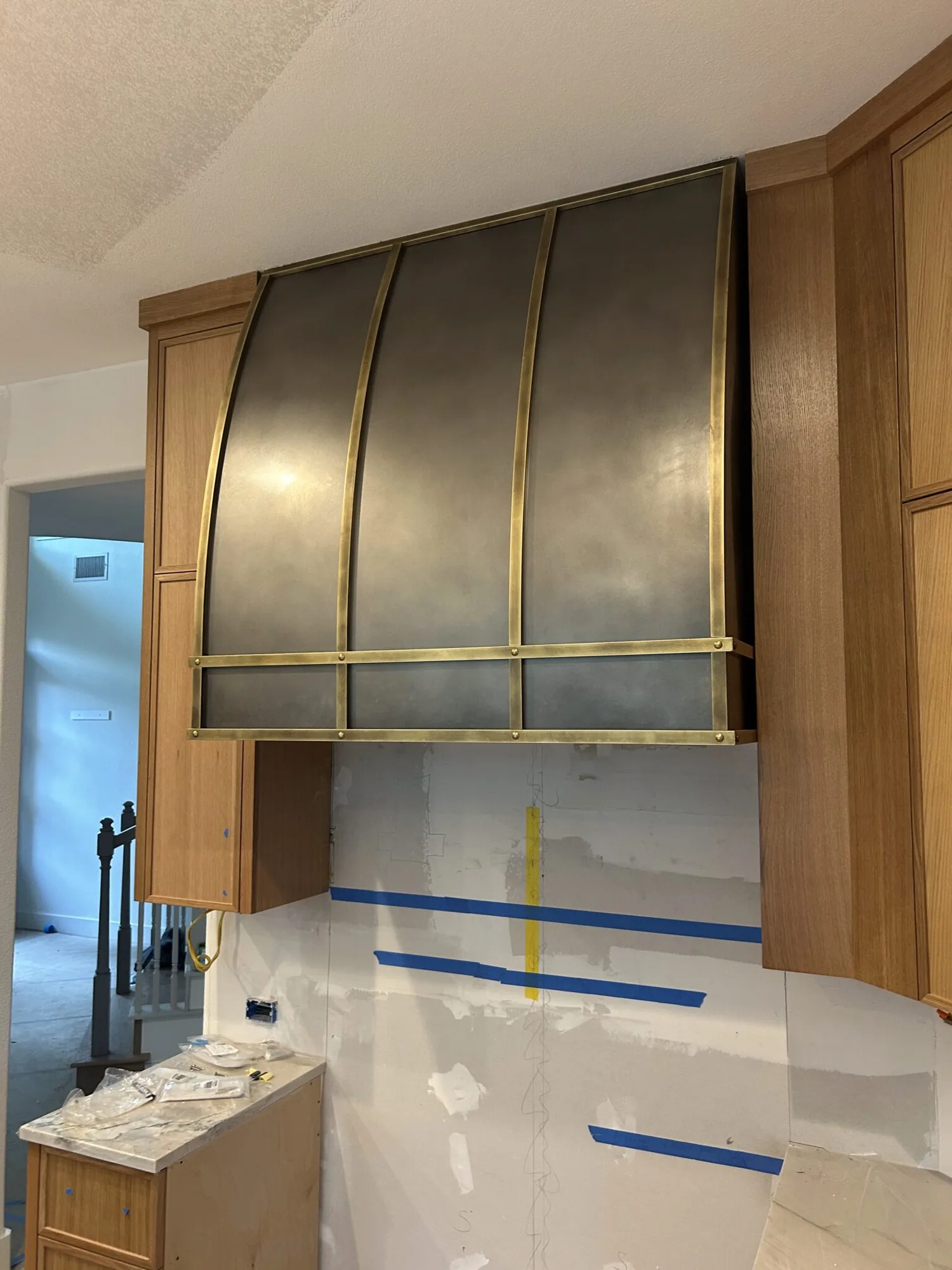
Replacing a hood while keeping good cabinetry can be a more demanding design exercise than starting with an empty room. The opening is already defined, the backsplash may be worth preserving, and the duct may enter at a point that no longer suits the equipment you are considering.
A custom hood gives you flexibility, but it cannot make an unsuitable cabinet opening or ventilation system disappear. Before committing to a replacement, establish what can stay and what needs to change.
Monarch’s NY/NJ team works with homeowners and design professionals on custom range hoods throughout Queens, including apartments, attached homes, and detached houses. For a renovation that retains part of the kitchen, a measured record of the existing room is especially valuable.
Measure the opening, not just the old hood
The width printed on an appliance label is not a complete description of the space available.
Have the cabinetmaker or contractor measure the clear opening, adjacent cabinet projections, ceiling or soffit height, and the position of the cooking surface. Record any crown molding, filler strips, light rail, or trim that extends into the space. Check where nearby cabinet doors swing.
Photograph the opening from the front and both sides. Include the underside of the old hood and any visible duct connection, without dismantling equipment yourself. These photographs help distinguish a cosmetic replacement from a project that also needs changes behind the cabinetry.
For a co-op or condominium, find out whether the existing vent serves the apartment independently or belongs to a shared building system. Retaining the cabinets does not remove the need to review the ventilation arrangement.
Choose the insert before approving the enclosure
The decorative metal canopy and the working ventilation equipment need to fit together. The insert’s dimensions, mounting details, discharge direction, and service access all influence the enclosure.
Equipment can require more room above the visible filter area than expected. For instance, Wolf’s Pro Hood Liner guidance specifies vertical discharge and space for the transition before certain duct-routing changes. That is an equipment-specific example, not a rule for every insert or a recommendation to use that product.
The lesson for a retained kitchen is practical: compare the actual installation drawings with the available space. Two inserts sold for a similar hood width may not be interchangeable.
Ask for the quotation to identify which ventilation components are included and which are being supplied elsewhere. That avoids approving a canopy around equipment that has not actually been selected.
Do not overlook the front burners
A shallow enclosure may sit neatly beside existing cabinets while providing poor coverage of the cooking surface.
Berkeley Lab’s research on residential exhaust hoods found that the tested hoods generally captured gas-burner emissions from rear burners more effectively than from front burners. Hood geometry was an important part of the result. Those tests do not predict the performance of a particular Monarch installation, but they explain why depth deserves attention alongside width.
Ask the designer to draw a section through the range and hood. It should show the relationship between the cooking surface, canopy, and insert at the proposed mounting height. Use the selected equipment and appliance instructions to resolve coverage and clearances rather than choosing a height purely to align with the cabinets.
Make a replacement look intentional
A new hood does not have to copy the old one to belong in the kitchen.
If the cabinetry has substantial crown molding, a quieter canopy may avoid adding another competing profile. If the cabinet doors are plain, a carefully placed band or pair of straps can introduce detail without changing the rest of the room.
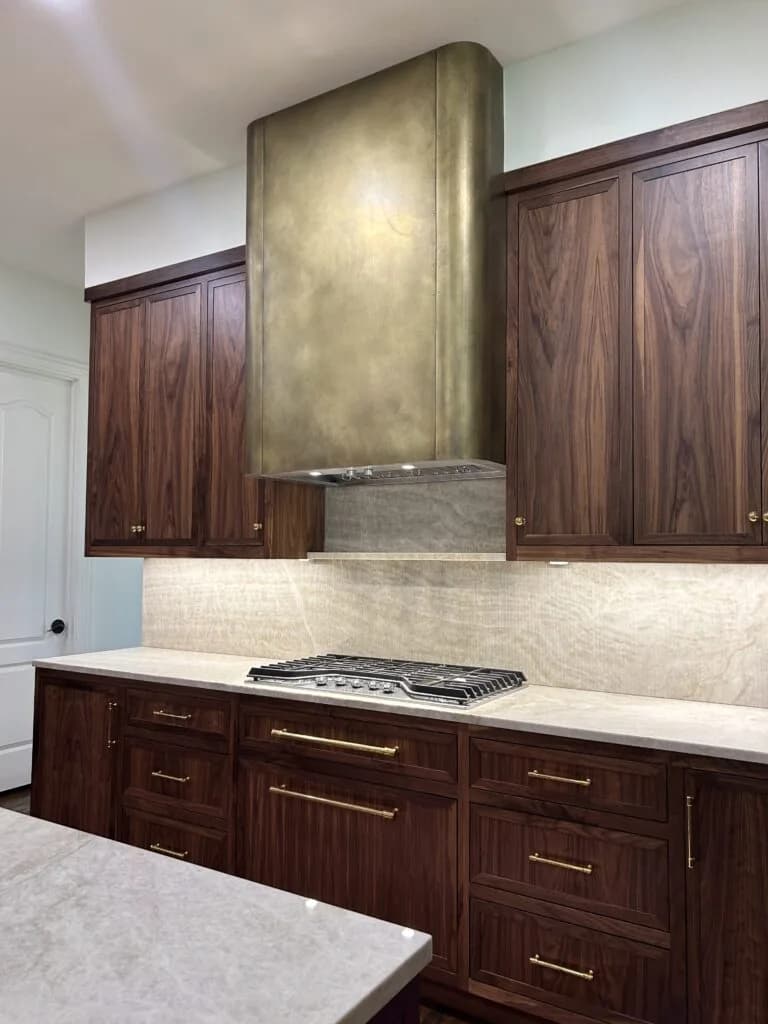
Matching every metal is not necessary either. A stainless body can relate to the range while a warmer trim connects to existing handles. With Monarch’s custom design options, these decisions can be shown together rather than treated as separate accessories.
Before choosing a finish, look at a sample beside the existing cabinets and backsplash. Older finishes may have changed with use and light; their current appearance matters more than the original paint or hardware description.
Confirm what the installation will disturb
Ask the contractor whether removing the old hood will expose unfinished tile, wall damage, or a gap in the cabinetry. Agree on who will complete that work and when.
A wider canopy might cover an old outline, but it should not be chosen as a patch without checking its proportions and installation requirements. Sometimes a small amount of planned cabinet or backsplash work produces a better result than forcing the new hood to conceal every trace of the old installation.
Questions about retaining an existing kitchen
Can I keep my cabinets and add a custom hood?
Often, but the opening, support, clearances, and ventilation equipment need to be assessed first. Custom fabrication provides flexibility within those requirements; it does not guarantee that every existing opening can stay unchanged.
Can the old duct be reused?
Possibly. Have a qualified contractor verify its size, condition, route, and suitability for the selected equipment before designing around it.
What should I send before anyone removes the old hood?
Send the range model, photographs, cabinet measurements, and any available appliance or ventilation drawings. Note which cabinets, tile, and trim you intend to retain.
Review the replacement before ordering
Send your Queens kitchen details to the NY/NJ team. Include both the look you would like and the parts of the room you plan to keep. That allows the hood design and the renovation scope to be considered together.
Keep reading
- Can You Vent a Custom Range Hood in a Manhattan Apartment?Explore ducted and recirculating hood options for a Manhattan apartment, plus building approvals, cabinet fit and delivery access.
- Designing a Range Hood for a Brooklyn BrownstonePlan a custom hood around a Brooklyn brownstone's architecture, cabinet layout and ventilation route, with guidance on landmark review.