
Brooklyn
Designing a Range Hood for a Brooklyn Brownstone
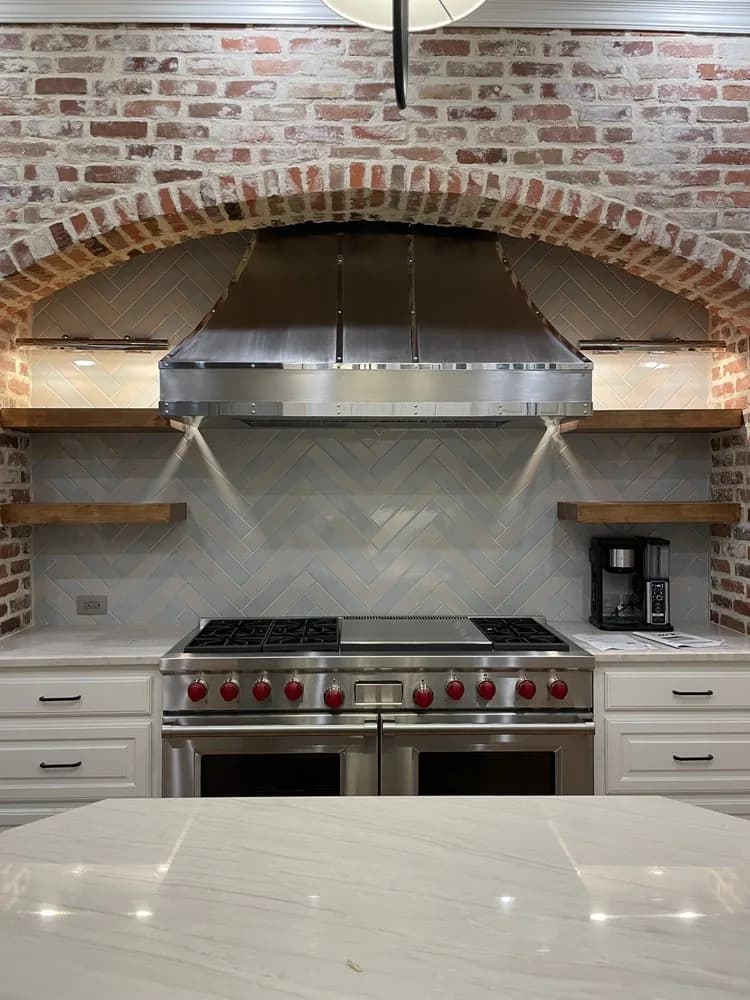
An original doorway, a run of tall windows, or a piece of retained millwork can give a brownstone kitchen its character. The range hood has to sit comfortably with those details without pretending to be another nineteenth-century feature.
There is no obligation to make it ornate. A restrained metal canopy can be a good counterpart to detailed cabinetry; a curved hood can soften a room with strong vertical lines. The more important decision is how much attention the cooking wall should command.
Monarch’s Brooklyn custom range hood service brings local design coordination to brownstone and townhouse projects, with each hood fabricated in Texas to the approved specification. Here are the decisions worth making while the renovation is still on the drawing board.
Decide what the cooking wall should keep
Before drawing the hood, identify the elements that are staying: a window opening, cornice, chimney breast, ceiling beam, or existing cabinet run. Then ask the designer to show the new cooking area in relation to them.
A centered hood does not necessarily create a balanced room if the surrounding architecture is asymmetric. It may be better to let the range and hood form one composition within a larger wall than to force every element onto a single centerline.
Consider the backsplash at the same time. A strongly veined slab and a hood with heavy straps can both be beautiful, but together they may introduce more detail than the wall needs. A quieter hood body can give the stone room to be seen. Alternatively, a simpler backsplash can allow the metalwork to take precedence.
Separate the canopy shape from the exhaust route
The outline of the hood is only part of the design. The space above it must accommodate the selected equipment, its connection to the duct, and any change in direction.
In an older house, ask the architect and contractor to establish the proposed route before agreeing to an especially shallow canopy or narrow upper section. An existing chimney or void should not be treated as an available exhaust path without professional assessment.
Bring a side section to the design review, not just the front elevation. It should make clear how far the hood projects, how it meets the wall, and where the mechanical connection sits. These relationships can be difficult to judge in a perspective rendering alone.
Check landmark status by address
A brownstone’s age and appearance do not establish whether it is landmarked. Check the individual property and any historic-district designation.
For designated properties, the Landmarks Preservation Commission’s permit guidance covers interior work requiring a Department of Buildings permit as well as work that affects the exterior, including vents and louvers. That means a kitchen project can require LPC review even though the decorative hood sits entirely indoors.
Nor should a rear-wall vent be assumed exempt simply because it cannot be seen from the street. The architect should establish the applicable approvals before a new exterior opening becomes part of the design.
LPC’s Certificate of No Effect process is one possible route for qualifying work. The appropriate permit depends on the proposal; a historic designation does not automatically mean a full public hearing is required.
Choose how the metal relates to the older finishes
An antiqued finish can be an effective bridge between new cabinetry and retained architectural details. It does not need to imitate the hardware elsewhere in the house exactly.
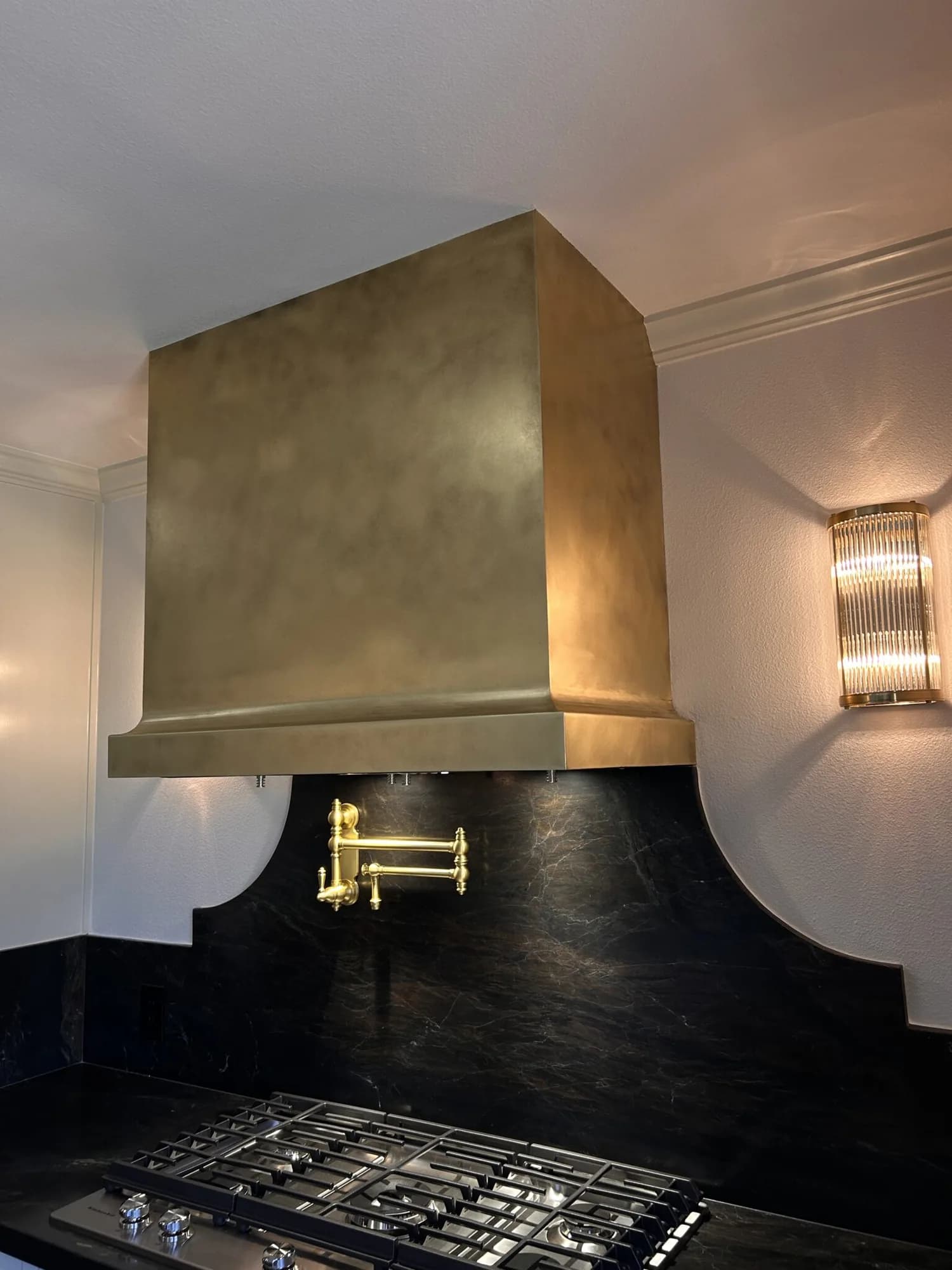
For example, a warm metal body might sit beside painted cabinets with relatively little additional ornament. A brushed stainless body with a contrasting band offers a different relationship: the body relates to the appliances while the band picks up a warmer tone in the room. These are design directions to test with samples, rather than fixed rules about which metal belongs in an old house.
With Monarch’s fully custom hoods, the profile and details can be developed together. Decide where straps and banding should fall in relation to cabinet doors and other horizontal lines, instead of adding them after the proportions have been settled.
Carry the design through the side views
A hood may be seen obliquely from a parlor, dining area, or garden-facing room. Check those views before approving the drawing.
Look for an awkward junction where a crown meets adjacent cabinetry, a return that projects into a walkway, or a flue cover that appears too narrow from the side. Discuss how old wall irregularities will be handled with the installer rather than expecting the metalwork to conceal them without a plan.
For a team coordinating several custom elements, Monarch’s NY/NJ trade support provides a regional contact for samples, pricing, drawing approval, and delivery coordination.
Brownstone renovation questions
Does a new kitchen hood have to look period-appropriate?
Not simply because the house is old. A contemporary hood can work well with retained architecture. Any restrictions affecting a designated property should be reviewed separately with the architect and LPC where applicable.
Can a new exhaust vent be placed on the rear facade?
That depends on the property, proposed location, and approvals. On a designated property, do not assume a rear facade falls outside LPC review.
Can I choose an aged finish rather than wait for the metal to change?
Yes. Monarch offers antiqued finishes. Review the sample and protective-finish specification so you understand the appearance being approved and the care it will require.
Bring the existing room into the first conversation
Share photographs of the features you plan to keep, along with the kitchen elevation and range specification. Contact Kaitlin and Brendan about your Brooklyn project to discuss a hood that works with the house you have and the kitchen you are creating.
Keep reading