
Long Island and the Hamptons
Choosing a Range Hood for a Long Island or Hamptons Kitchen
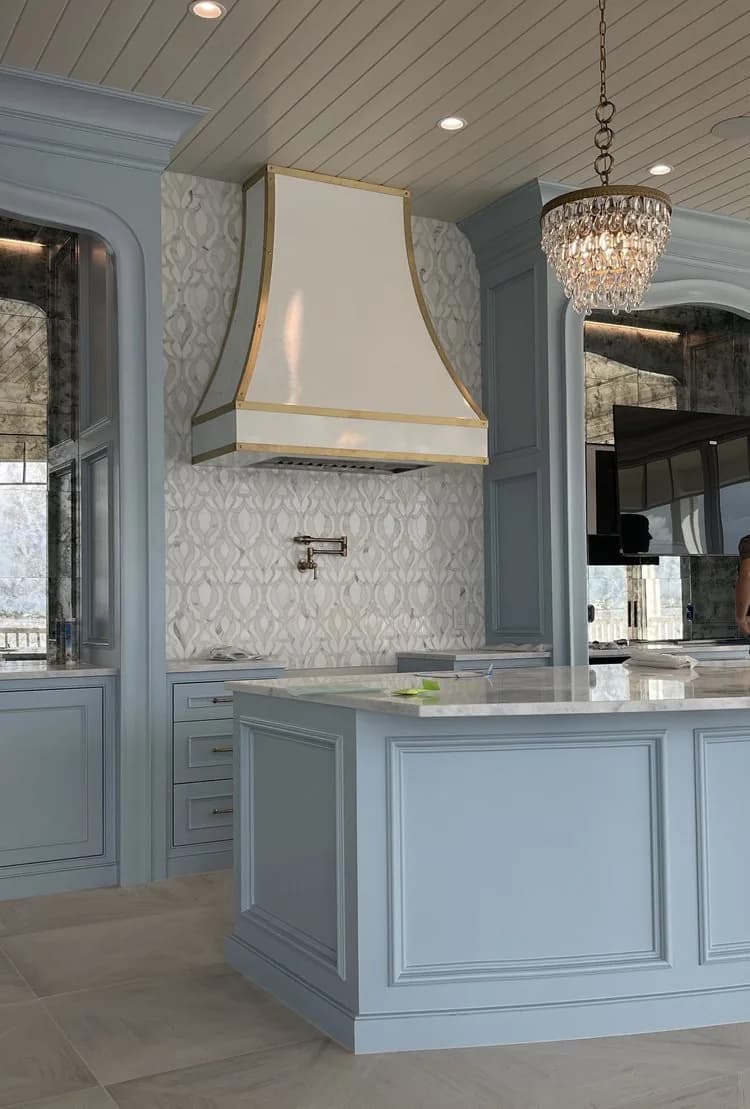
A hood finish can look right beside a cabinet sample and quite different across a completed kitchen. Scale changes the effect: a small piece of polished metal is an accent, while a broad canopy in the same finish can dominate the room.
For a Long Island renovation or a Hamptons home, it is worth deciding how the hood should relate to the entire kitchen before settling on a particular metal. Consider the stone, cabinetry, lighting, and the views from adjoining rooms together.
Monarch has created hoods for homes in Melville, Setauket, and Bellmore. Its New York and New Jersey team serves Long Island, including Nassau County, Suffolk County, and the Hamptons, with local design guidance and sample review.
Choose what should draw the eye
Some kitchens begin with a remarkable slab of stone. Others are organized around detailed cabinetry, a large range, or a view through the room. The hood does not have to compete with all of them.
If the backsplash has pronounced movement, consider a simpler canopy that leaves more of the stone visible. If the cabinetry and stone are quiet, a curved profile or warmer metal may provide the detail the room needs.
In an open kitchen, evaluate the hood from the places where it will be seen most often: the dining table, the living area, or the entrance. A design that seems understated from several feet away can appear busy at close range. Both views deserve consideration before approving decorative details.
Bring the finish samples together
Arrange one review with the cabinet door, countertop or backsplash sample, hardware, and hood finish in the same place. Comparing them separately makes it harder to notice small differences in tone and sheen.
Hold the metal sample upright, in roughly the orientation of the finished hood. Compare it under daylight and the lighting planned for the room. The Department of Energy explains how light sources affect the appearance of colors; the sample review should account for those differences rather than relying on a photograph alone.
For a second home, coordinate this review during a site visit before final finish approval. Your designer can record the selected sample references and share them with the NY/NJ team. A phone image is useful for keeping track of the decision, but it should not become a substitute for the physical sample that was approved.
Decide how much metal you need
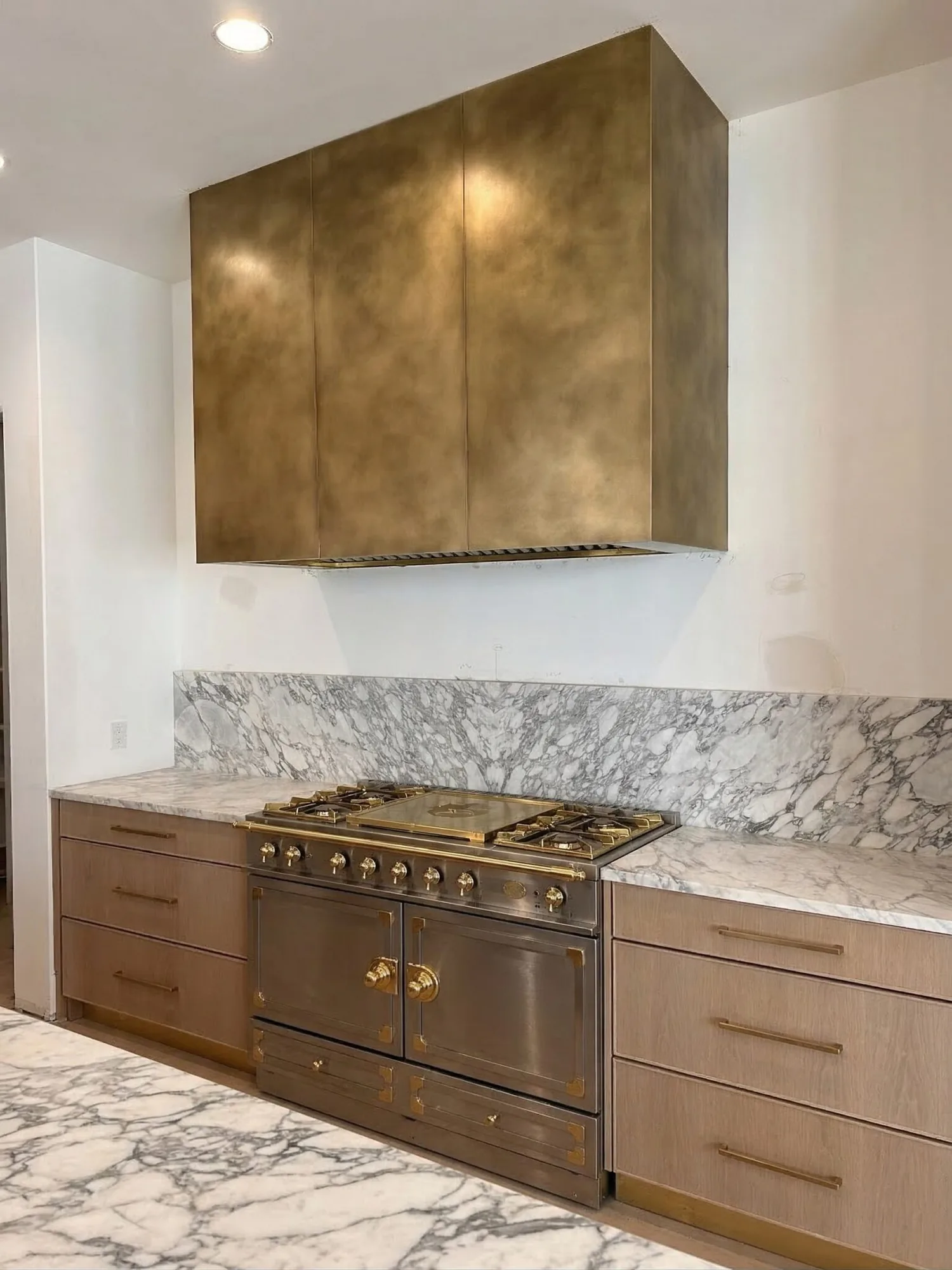
You do not have to make the entire hood brass to introduce brass into the room.
A stainless or powder-coated body with contrasting straps or banding can repeat a hardware finish in a more measured way. Conversely, a full metal body may need very little additional ornament. Consider the width and spacing of the details as carefully as their color.
Monarch’s custom hood designs allow the body and accents to be specified together. Ask to see the complete combination on the drawing; a sample of each material does not show how much of either will be visible on the finished piece.
A color-matched powder-coated hood also needs sample approval. Painted wood and coated metal can reflect light differently, even when they are intended to share a color. Decide whether a close relationship or a deliberate contrast is the more convincing result.
Look above and below the canopy
The main body usually receives most of the attention, but the ceiling connection can make a considerable difference to the finished kitchen.
In a tall room, show the full distance from the cooking surface to the ceiling. Consider whether a longer upper section looks balanced with the canopy or whether the profile needs to be developed differently. Do not change the mounting height solely to improve that proportion; it must remain appropriate for the selected equipment and appliance.
At the lower edge, review the insert, filters, controls, lights, and visible trim. The underside is part of the hood you will see every day. Its relationship to a thick lower band or curved body should be intentional, not discovered at installation.
For a shore home, describe the setting accurately
An enclosed, conditioned kitchen and a covered outdoor cooking area are different applications. Make that distinction clear at the start, particularly when the home is close to the water or the kitchen opens directly to an exterior living area.
Ask the team to confirm the proposed material, protective finish, care requirements, and suitability for the actual location. A coastal address alone is not enough information to select a finish, and an interior hood should not be assumed suitable for outdoor exposure.
Review the available Monarch finishes, then discuss the particular setting rather than choosing from a general promise about which metal is best near the shore.
Long Island and Hamptons design questions
Does the hood have to match the cabinet hardware?
No. It can match, complement, or contrast with the hardware. Review the complete palette and the amount of each finish visible in the room before deciding.
Can I review samples with someone locally?
Yes. Arrange an appointment with the NY/NJ team to discuss materials and view available samples. Confirm the meeting arrangements directly with Kaitlin or Brendan.
Can I use an indoor hood in a covered outdoor kitchen?
Do not assume so. The hood, finish, ventilation equipment, and installation need to be suitable for that application. Have the complete specification reviewed before ordering.
Bring the kitchen materials to the discussion
Arrange a Long Island design consultation with Kaitlin and Brendan. Share the room drawings, range model, and the materials already selected. The next step is to develop a hood whose proportions and finish hold together in the finished kitchen, not only on a sample board.
Keep reading
- Wall or Island? Choosing a Range Hood for a Staten Island KitchenCompare wall and island hood layouts for a Staten Island kitchen, including sightlines, ventilation, ceiling connections and finish selection.
- When to Order a Custom Range Hood for a Bronx RenovationCoordinate a custom range hood with your Bronx renovation, from appliance and cabinet decisions to drawing approval, delivery and installation.