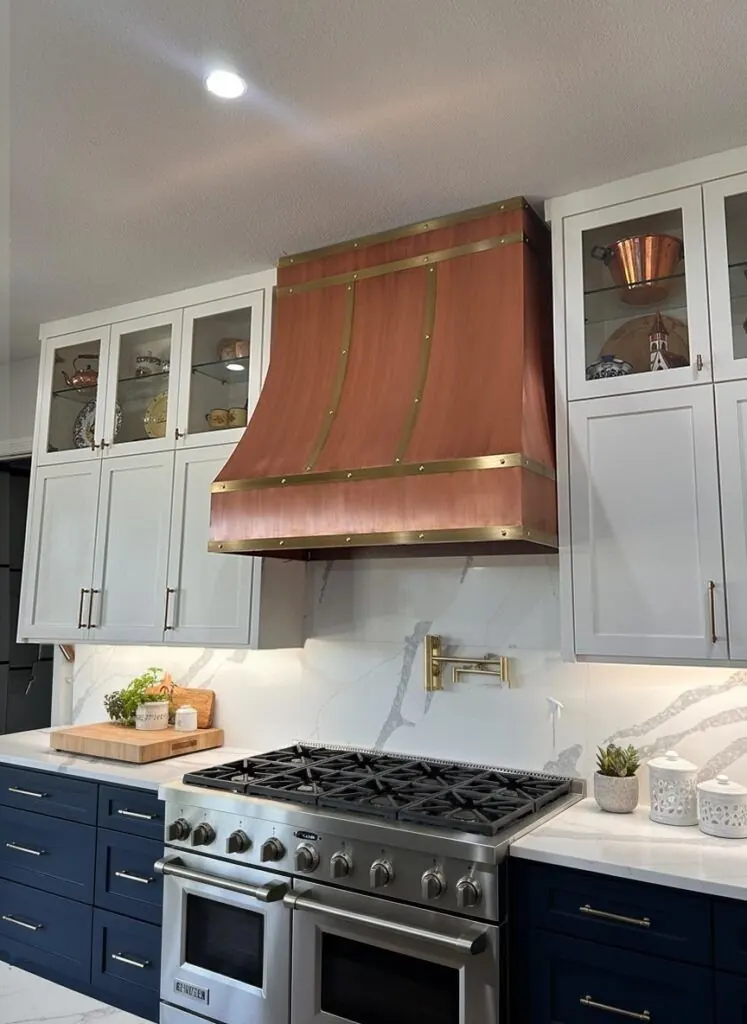
Copper is a beautiful choice for a custom range hood, bringing warmth and character to any kitchen. At Monarch, each copper range hood is handcrafted and finished to achieve the look our customers want, whether that is a natural brushed copper finish or a rich, aged patina. We also apply a protective clear coat to preserve the finish and prevent the copper from naturally changing color over time, unless an unlacquered finish is specifically requested. Before choosing a copper range hood, it helps to understand the finishes available, what affects pricing, and how to properly care for your hood.
Full copper body or copper accents
There are two ways to bring copper into a hood, and they land in very different places on price and presence.
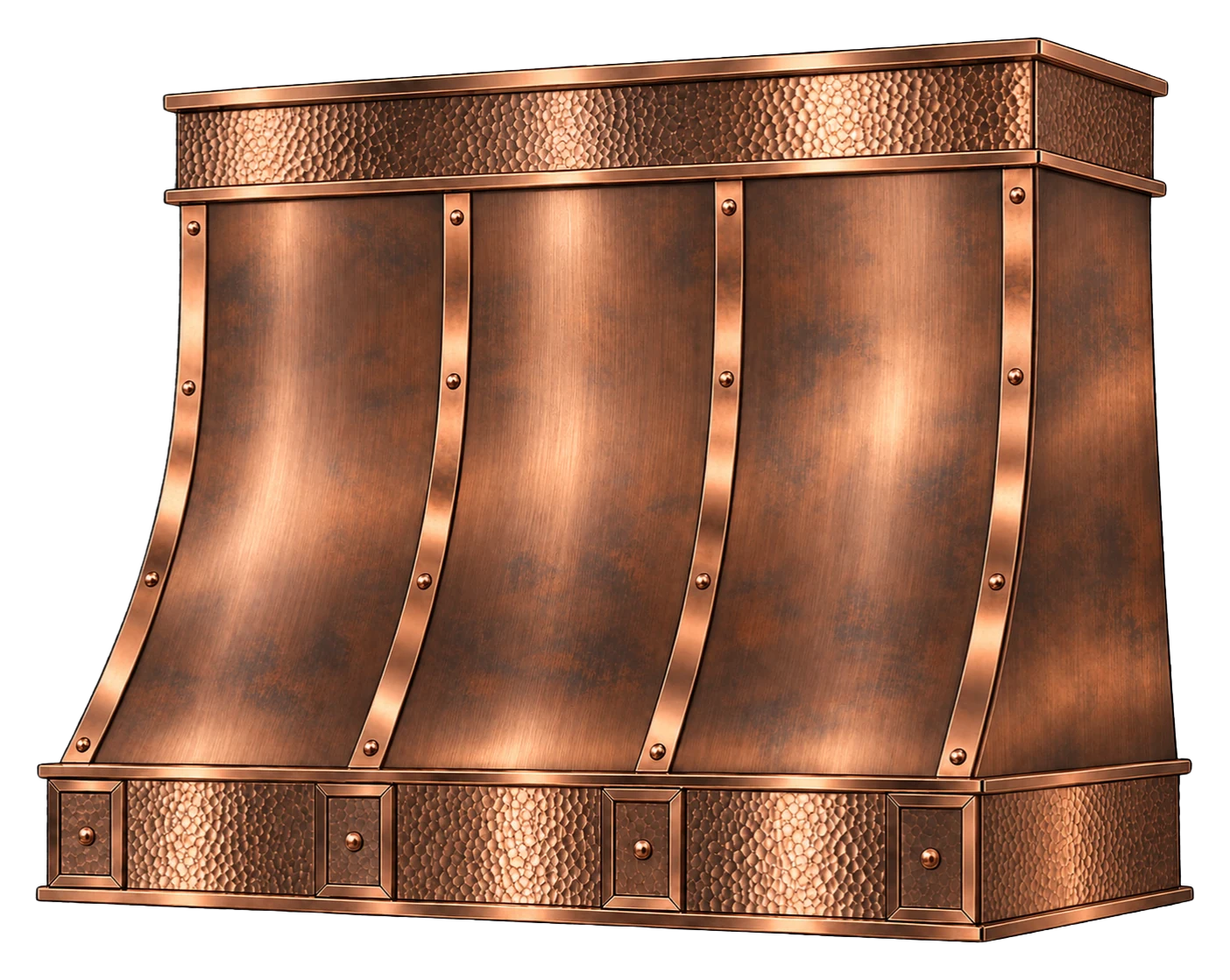
A full copper body means every visible panel is copper sheet. It is the boldest version and the warmest, and it carries the room. The Royal Collection hood in Ripon, California is full copper with an antique patina, set against dark stone. The Havana hood in Oak Point, Texas pairs a copper body with brass straps, so the two warm metals sit side by side.
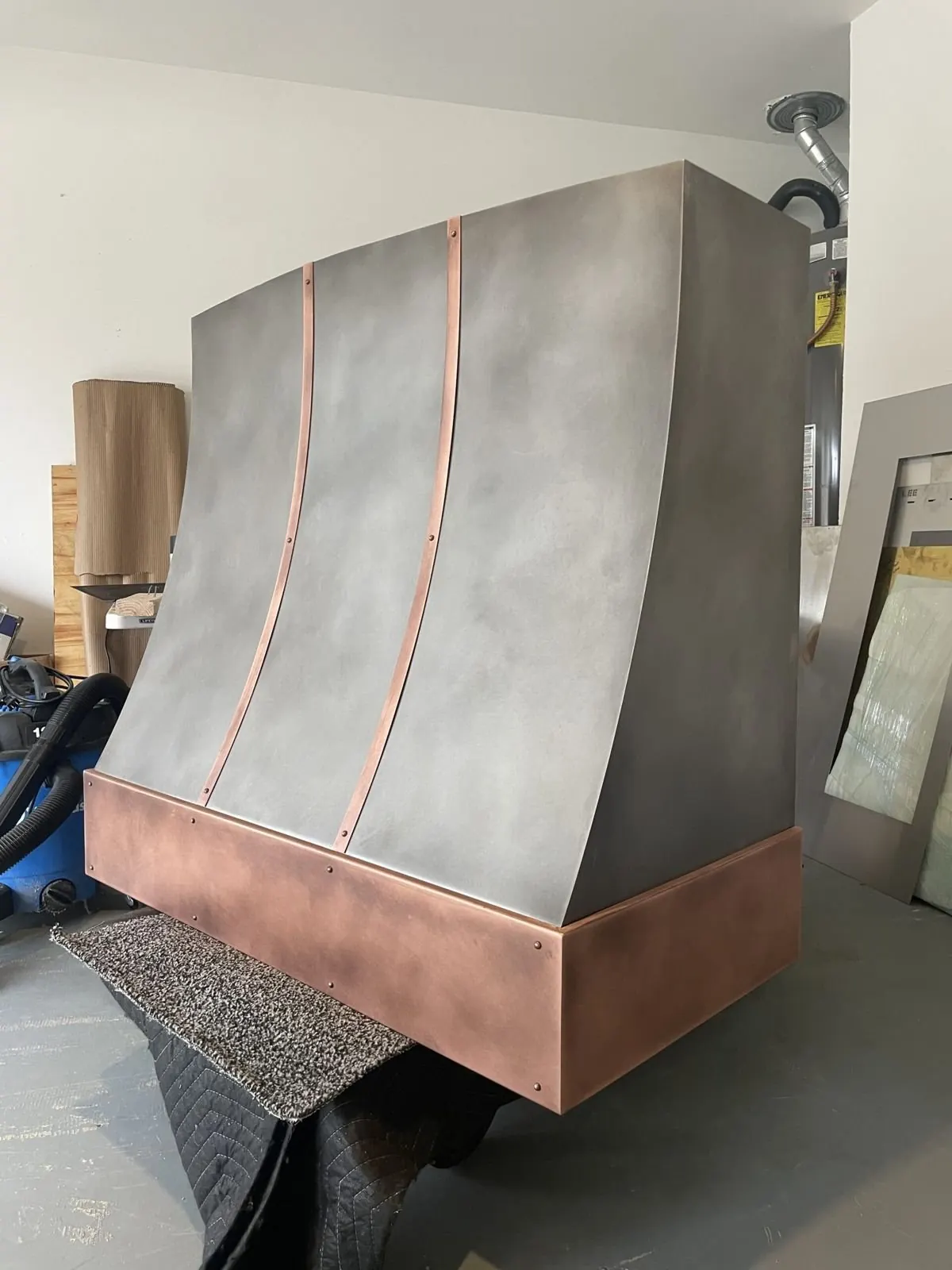
Copper accents are another way to bring this beautiful metal into a custom range hood without making the entire hood out of copper. Details such as copper straps, crown molding or apron trim can be paired with a stainless steel or darker finished body to create a unique contrast. The Havana hood in Lucas, Texas has a brushed stainless body with copper straps and a copper apron band. The Monarch Collection hood in Wellington, Florida uses copper straps on stainless. You get the glow without a full copper mass, and less copper sheet means a lower number on the quote.

The copper finishes we offer
Every copper hood is finished by hand in our Garland studio. These are the finishes we reach for most, and the copper finish page shows each one on real hoods.
- Hand Brushed. A linear grain brushed in by hand. The brightest copper, closest to a new penny, with the grain catching light along its direction.
- Matte. An even, low-sheen surface with a softer, pinker tone. Quiet next to busy stone.
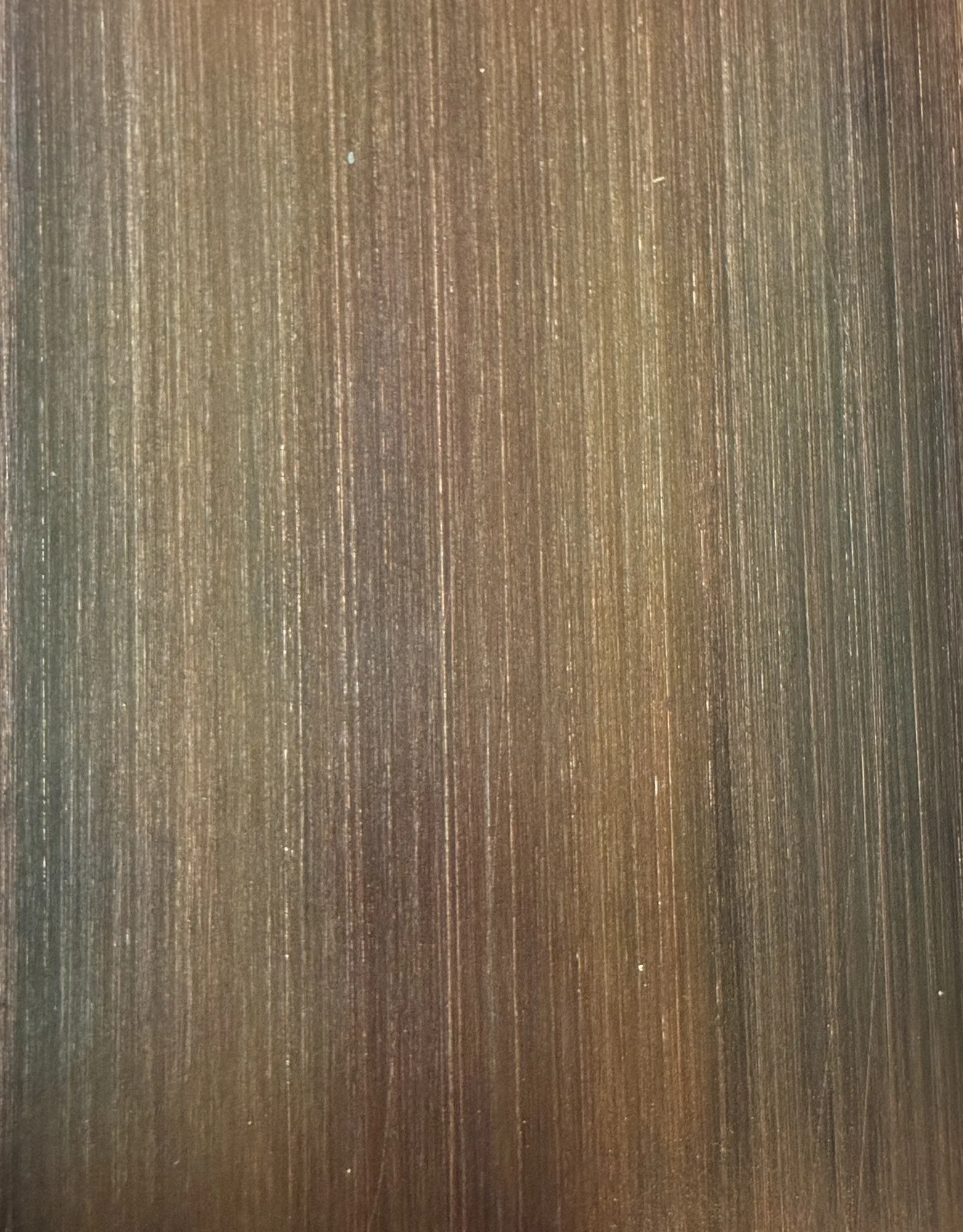
- Hand Brushed Antique. The brushed grain is darkened by hand, so the lines read through a deeper brown.
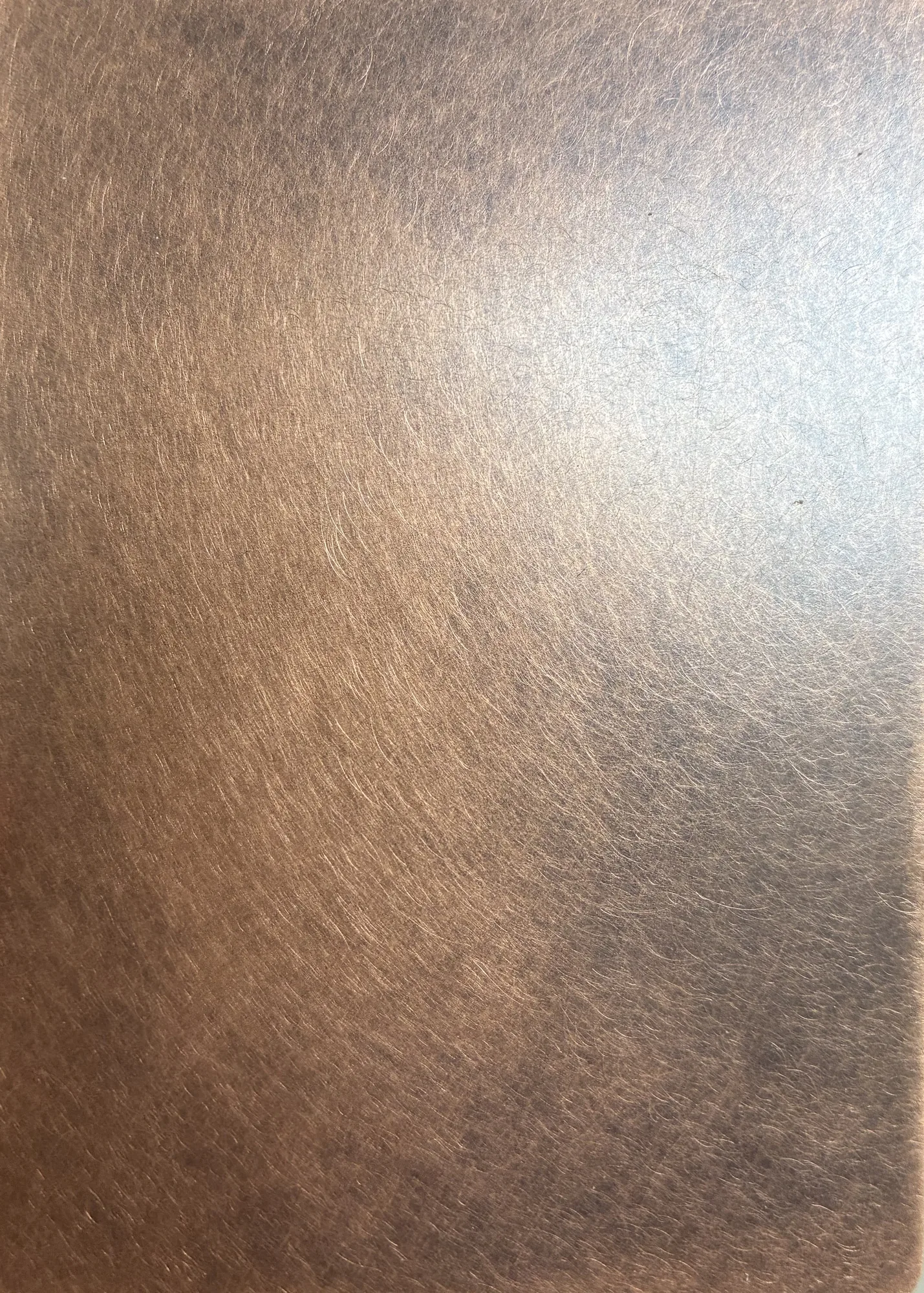
- Cloudy Antique. Mottled, uneven darkening, closer to old cookware than new sheet.
Antiqued finishes come at 25, 50 or 75 percent. The number is how much of the surface is taken dark. At 25 percent most of the bright copper still shows. At 75 percent the hood reads close to a brown bronze, with copper glowing through at the edges.



Hammered copper
Hammering puts a hand-struck texture into the metal. It catches light in small facets, and it hides fingerprints and small marks better than a flat sheet. On the Long Island Collection, the Montauk Luxe carries hammered crown and apron bands, and it comes in 25 percent cloudy antiqued copper. A fully hammered body is a custom request. Expect it to add shop hours, because every strike is made by hand.
Why we clear coat our copper
We clear coat nearly all of our copper hoods. The coat protects the finish and keeps the copper from aging or changing color on its own, so the hood stays the finish you chose. About 95 percent of our customers want their copper sealed for exactly that reason.
The exception is an unlacquered finish, made only when a customer asks for it. Unlacquered copper is left to develop a natural patina: fingerprints darken first, the surface browns over months, and damp spots can turn green. We are happy to build it, but it is not our standard process.
If you love the look of aged or antique copper, we create that finish by hand in our studio with our patina process, then apply a protective clear coat to hold it. Our post on how a hand-applied patina is created walks through that work step by step.
What a copper range hood costs
Monarch’s custom hoods typically run $5,500 to $20,000 and up. Copper sits toward the upper part of that range for two reasons: copper sheet costs more than stainless, and copper finishes take more skilled hours. A full copper body costs more than copper straps on stainless. After the metal, the price moves with size, shape, strap and rivet detail, and how many stages the finish takes.
Supplier metal prices move, so the number is set by your drawing and quote, not by a chart. Our Texas cost guide breaks down every line on a quote, including what is usually separate, like the ventilation insert and installation.
Caring for a copper hood
A sealed copper hood needs less care than people expect.
- Wipe it with a soft, damp cloth, then dry it right away with a second cloth so water does not spot.
- Skip abrasive pads, scouring powder and cleaners with ammonia or bleach. They can cut the clear coat, and once the coat is broken the metal underneath starts to change.
- Do not use copper polish on a sealed hood. Polish is meant for unlacquered copper.
- The underside near the cooktop collects the most grease film. Clean the insert filters on the schedule the insert maker gives you, and the hood body stays cleaner.
- If a brushed surface gets a scratch, call us before sanding anything. Brushed grain has a direction, and a repair needs to follow it.
Making copper work with the rest of the kitchen
Copper is warm, so it needs something to push against. In Oak Point it sits between white glass front cabinets. In Ripon it stands against dark veined stone. Brass straps on copper keep the whole piece warm. Copper straps on stainless or a dark body bring warmth into a cooler kitchen without taking it over. Look at your faucet and hardware too: unlacquered brass and bronze sit comfortably next to copper.
Start a copper hood
Send us your range width, your ceiling height, a photo of the wall and any inspiration you have. You get drawings and a quote with the shape, size, straps, rivets and finish settled before anything is cut. A 50 percent deposit starts fabrication after you approve the quote. You approve a final CAD drawing, with three chances to request changes within five days. Fabrication takes 8 to 16 weeks, with weekly progress updates, and expedited shipping is available on request. The finished hood is crated and shipped from Garland to anywhere in the country, and we walk your contractor through the installation.
Want to see the copper finishes in person first? The Garland studio is open by appointment. Call (682) 702-5580 or request a quote.
Copper range hood questions
Will a copper range hood turn green?
Not with our standard finish. We clear coat nearly every copper hood, so it holds the color you chose. Only an unlacquered hood, made on request, is left to age naturally, and that copper can darken and turn green in spots that stay damp. If you want an aged look, we create the antique finish by hand and seal it.
Can I get a copper hood with brass straps?
Yes. The Oak Point, Texas Havana hood is a copper body with brass straps. You can also reverse it: copper straps on a stainless body, as on the Lucas and Wellington hoods.
Is a copper hood harder to keep clean than stainless?
Not when it is sealed. A damp cloth, dried right away, does the job. The difference is that copper shows harsh cleaners more, so stay away from abrasives.
Do you build copper hoods for kitchens outside Texas?
Yes. Every hood is built in Garland and shipped crated anywhere in the United States. Ripon, California and Wellington, Florida are two recent copper projects.